

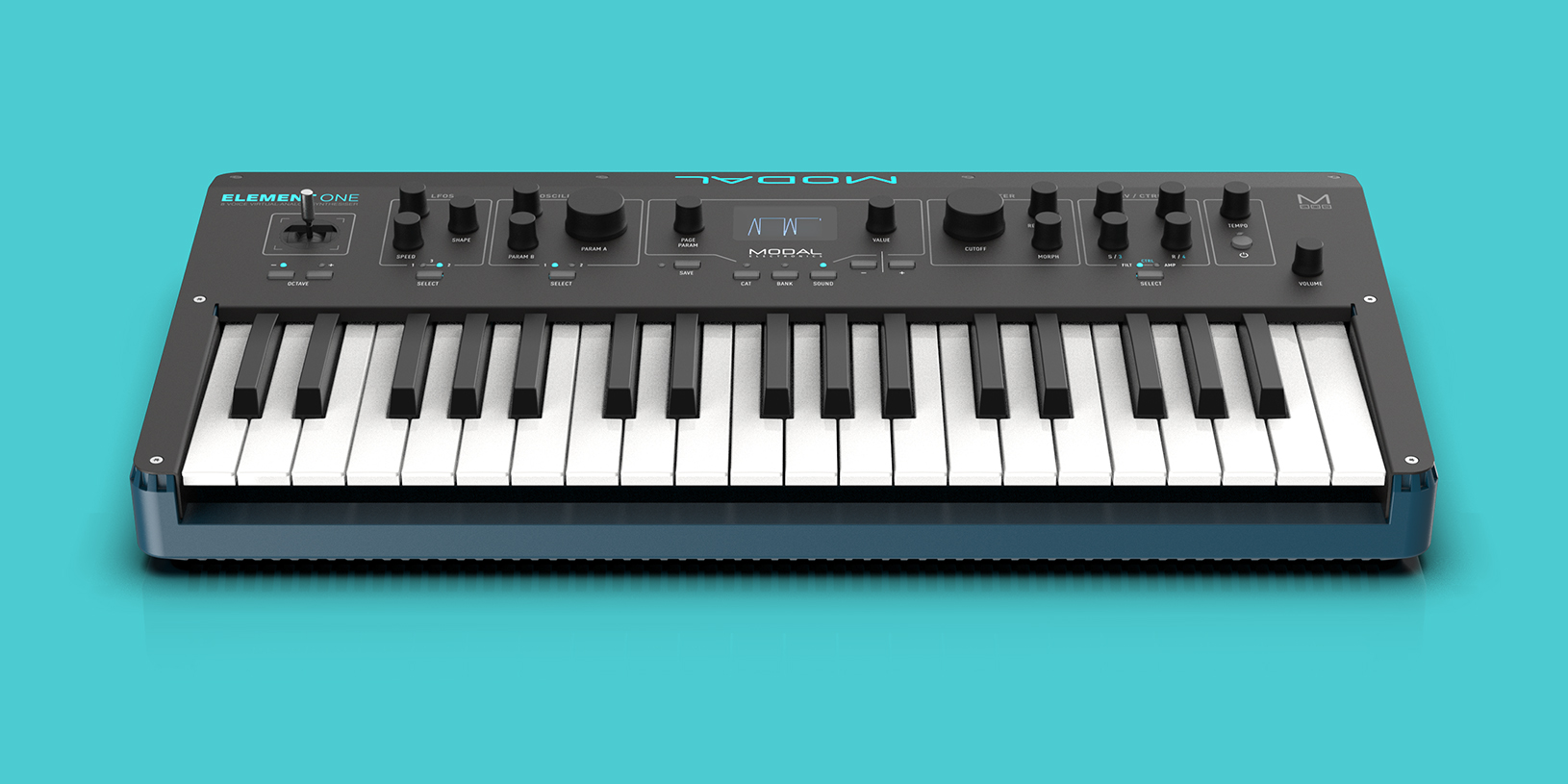
MODAL ELEMENT ONE
A new chapter in a story that began more than a decade ago
In 2013, Philip Taysom came to visit us in Ravensburg. A passionate synthesizer enthusiast and collector, Philip arrived with the idea of creating an entirely new synthesizer company. Its original name was to be Modulus. Not long afterwards, Modulus became Modal.
The first instruments to carry the new name were uncompromising flagship synthesizers: the 002 wavetable synthesizer, developed by Paula Maddox, followed by the 008, developed by George Hearn, who would later pursue his own vision of electronic instruments with UDO Audio. Paula, George, and Philip shared not only a passion for synthesizers, but also a connection to Bristol – a city that seems to provide remarkably fertile ground for exceptional electronic instrument design.
Their paths eventually diverged, but Modal's original ambition had been clear from the outset: to create synthesizers with a distinctive character, exceptional sonic capabilities, and an equally distinctive visual identity.
We became involved at this very early stage, initially being commissioned to develop the identity for the new brand. The Modal logo – originally conceived for Modulus – was created together with the distinctive waveform icons. Both have remained integral parts of Modal's visual language ever since.
Over the years, Modal evolved considerably. A new generation of more compact and accessible instruments brought the brand to a much wider audience, combining remarkable functionality with consistently considered product design. As the instruments became increasingly powerful, however, another question became equally important: how could that depth and complexity be made more immediate, understandable, and intuitive?
Following a period of significant change within the company, a new chapter began in 2024 – and for the first time, our core discipline of industrial design became central to our collaboration with Modal.
The beginning of the Element family
Working with Christian Moore and under the new ownership of WT Technology Development Company Limited in Hong Kong, we began evolving the established Modal DNA. The intention was not to reinvent the brand, but to distill its most characteristic elements and translate them into a new family of compact instruments.
The first result of this collaboration is the Modal Element One, introduced at Superbooth 2026.
At the heart of the project was a simple idea: complex synthesis, made immediate. A powerful synthesizer should not necessarily feel complex. Its essential functions should be directly accessible, relationships should be visually understandable, and interaction should feel natural from the first encounter. At the same time, the physical architecture needed to support an attractive price point without compromising the instrument's character or perceived quality.
These two objectives – visual distinction and intelligent construction – shaped the design from the outset.
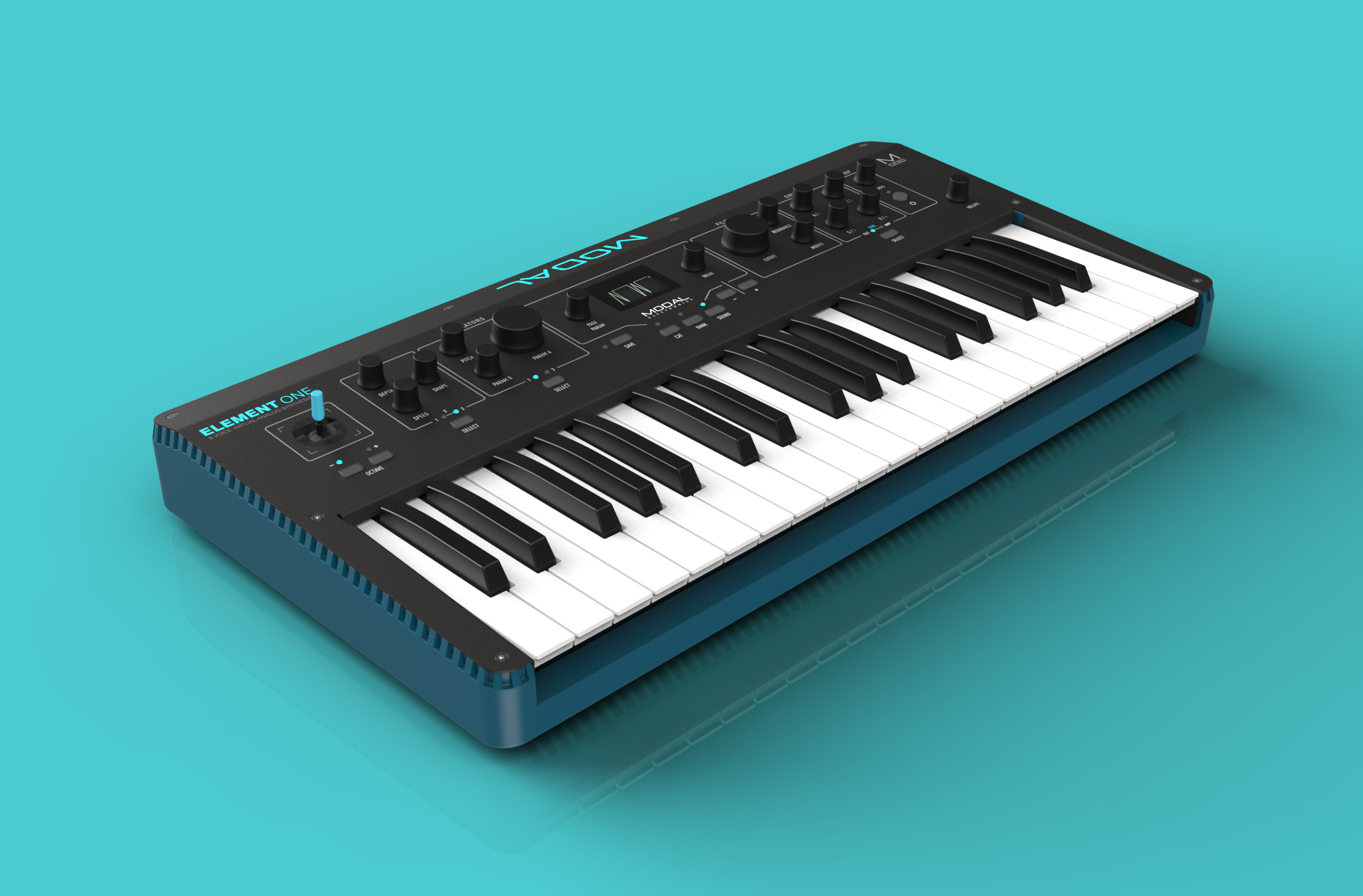
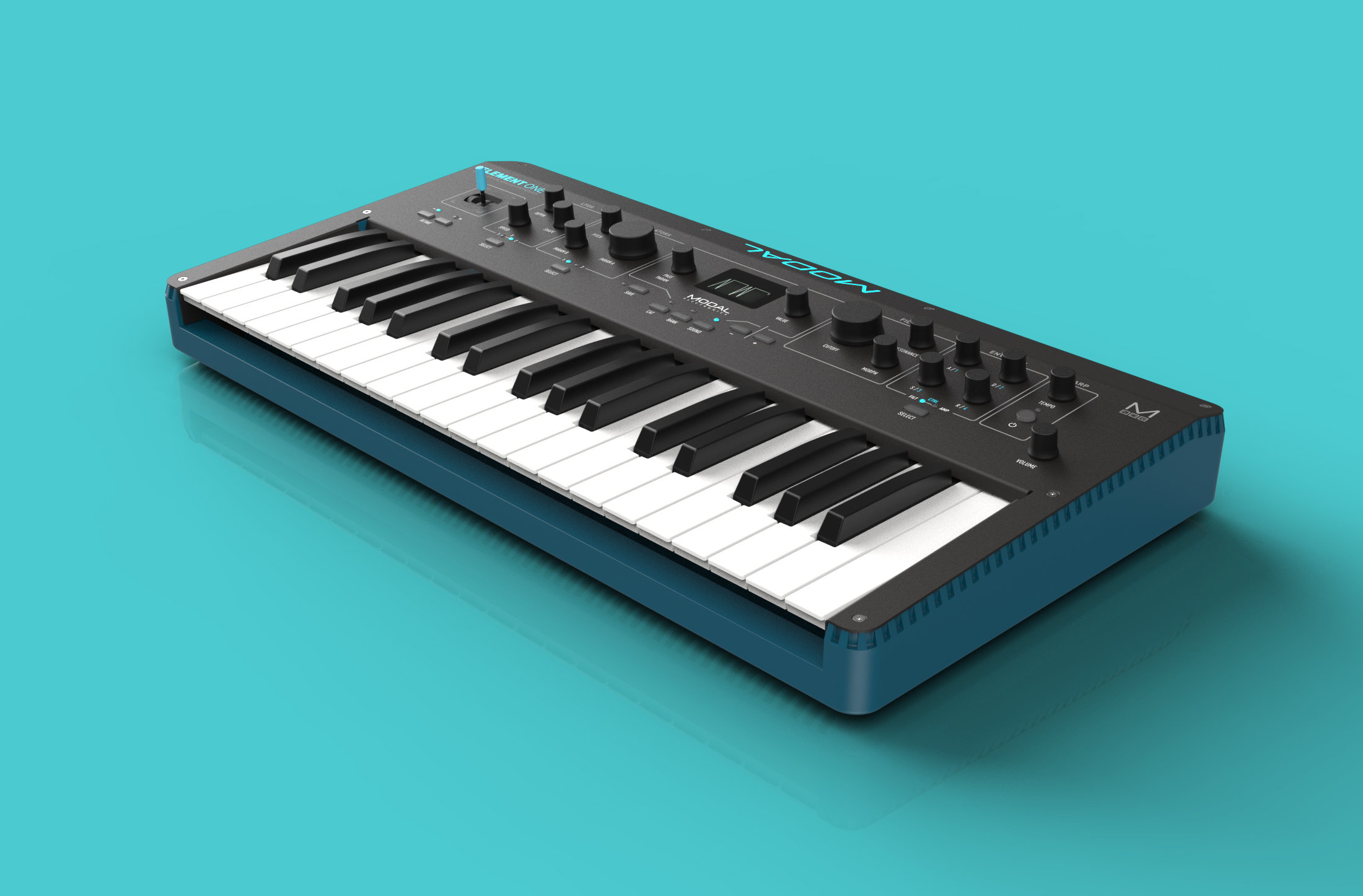
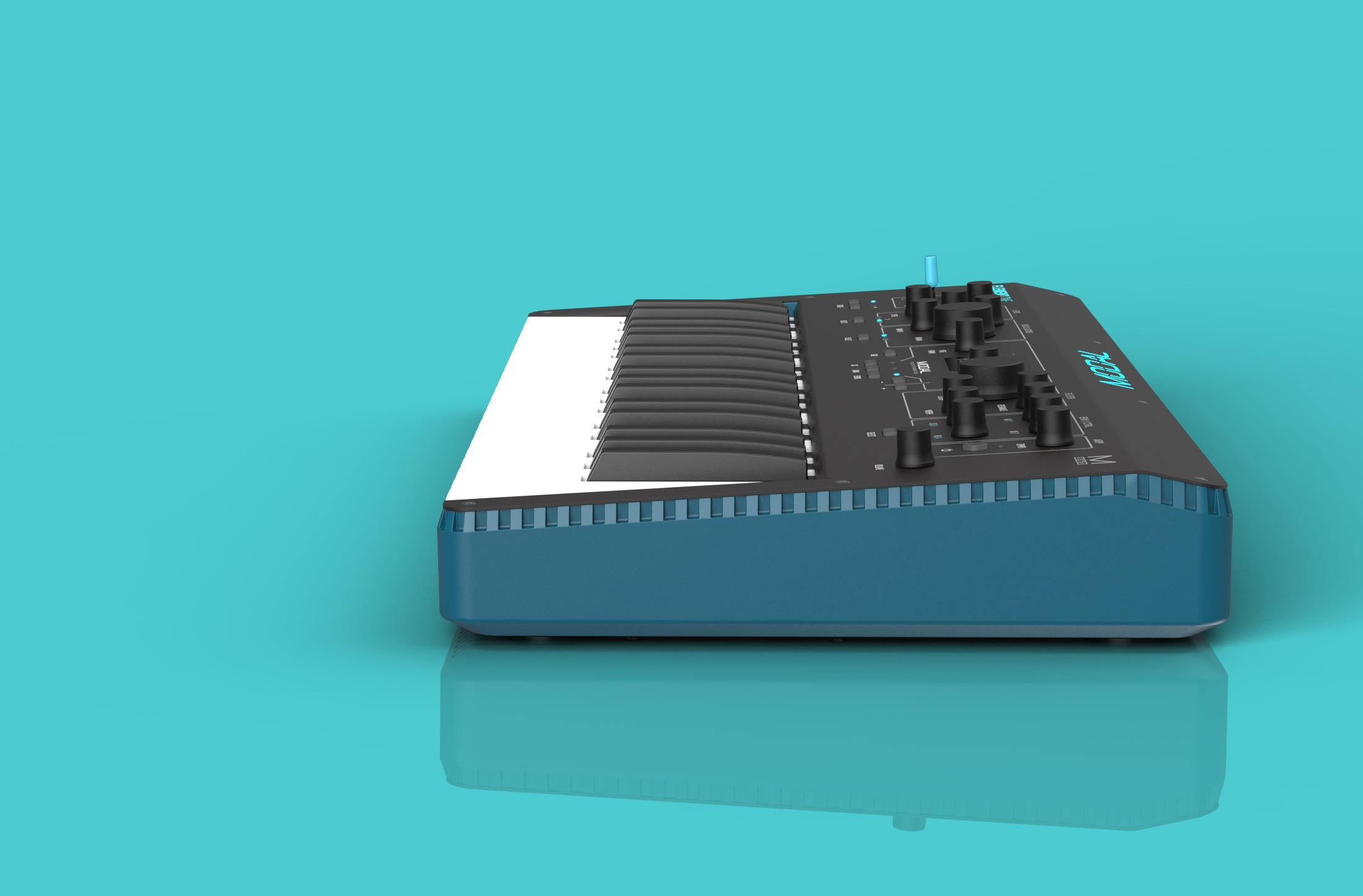
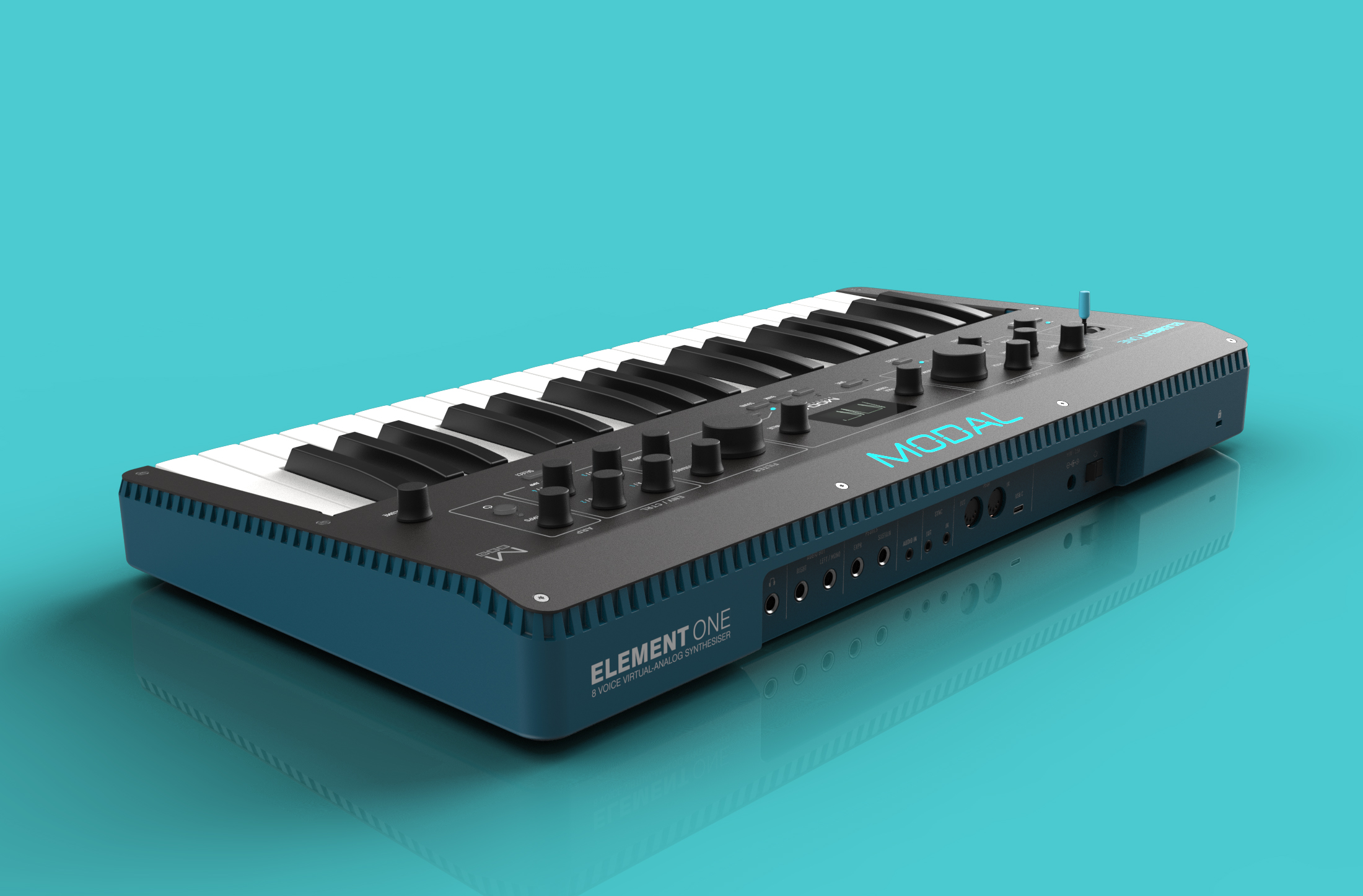
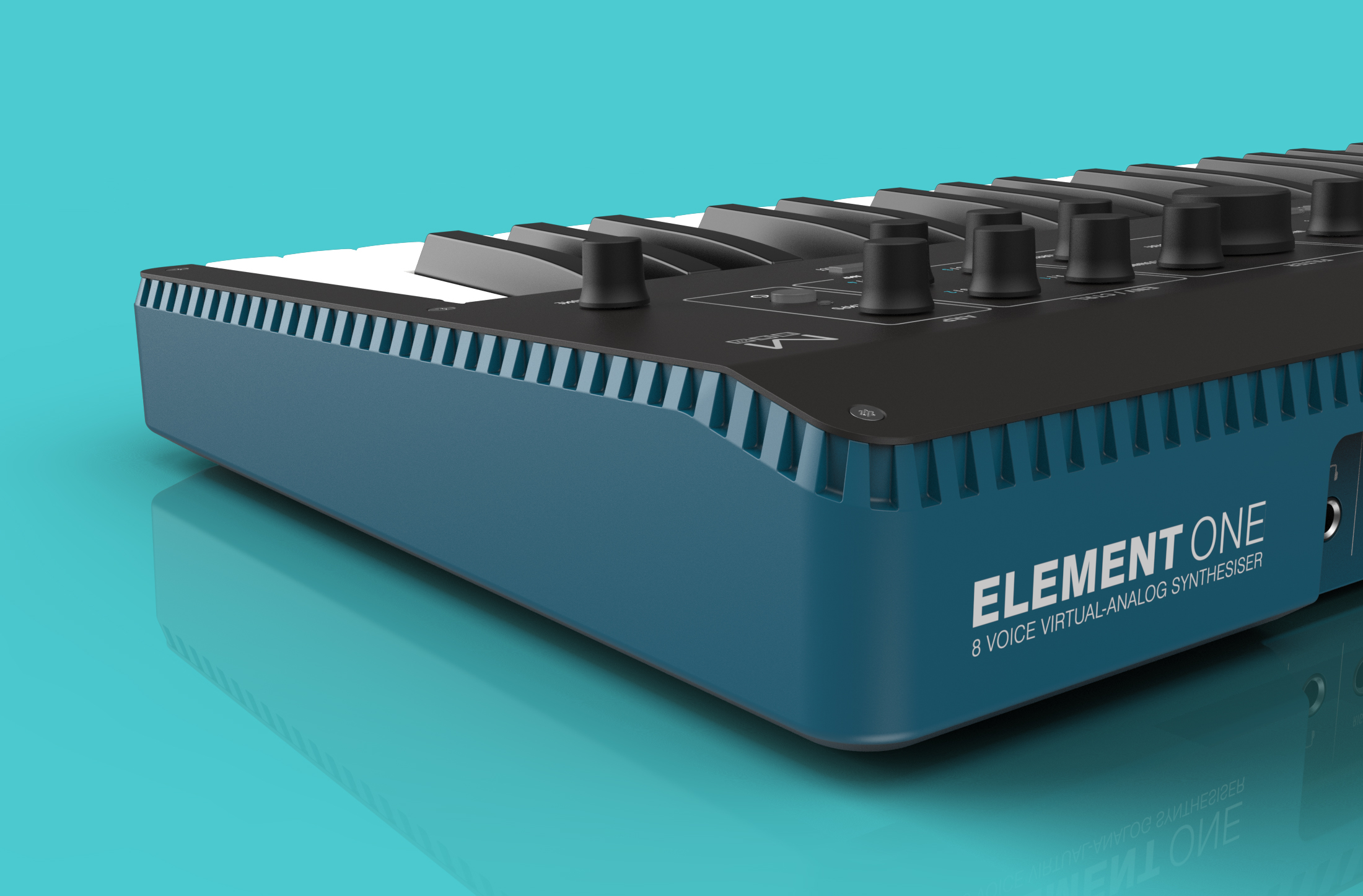
Element One is built around a high-quality injection-molded lower enclosure, covered by a black powder-coated metal top panel that appears to float above the main body. The precision and visual calm of this upper surface deliberately contrast with the more sculptural volume beneath it. Between the two runs a continuous band of vertically formed three-dimensional ribs. This detail breaks down the mass of the enclosure, gives the upper panel a sense of lightness, and establishes one of the defining elements of the new Element design language.
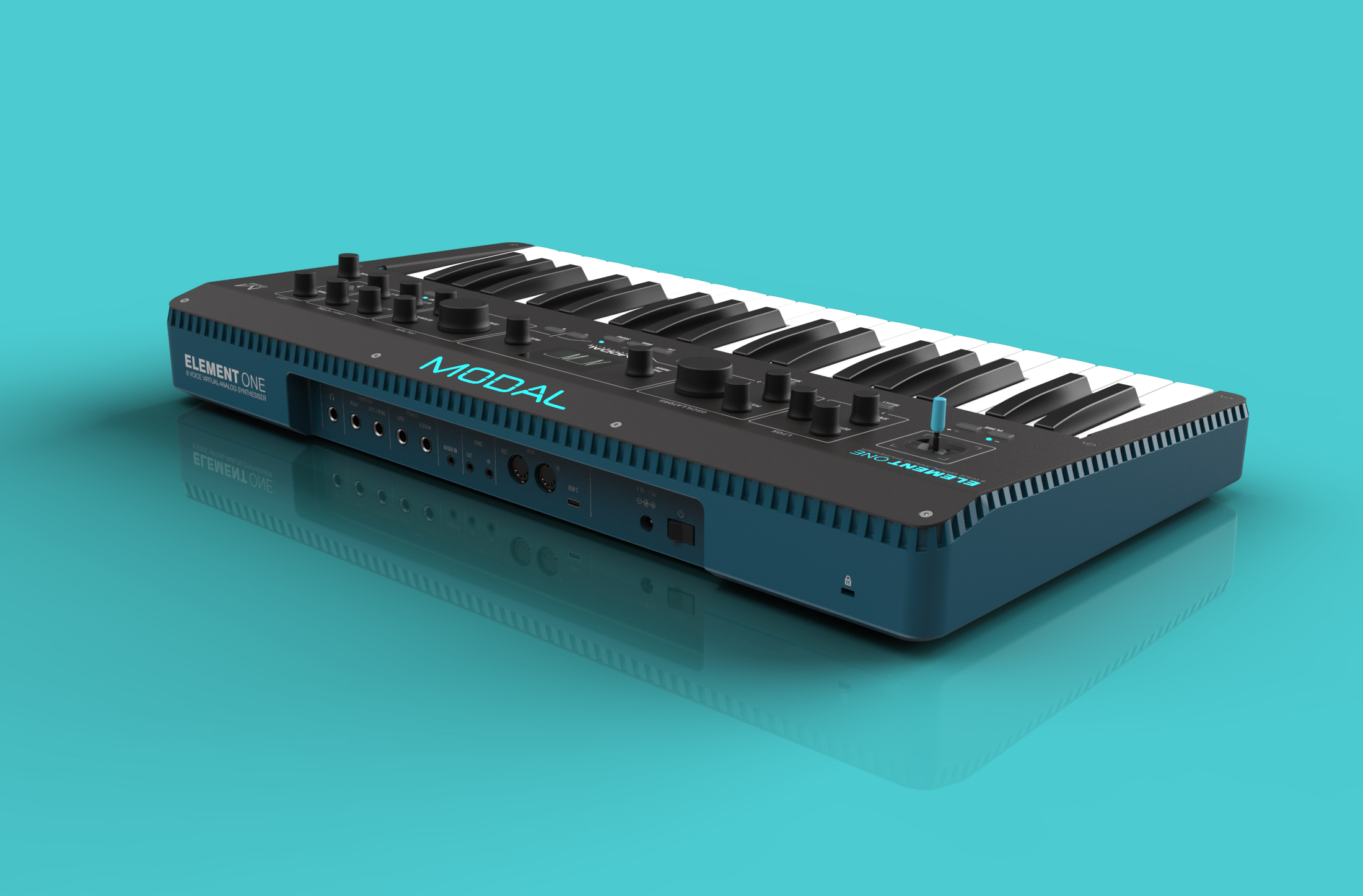
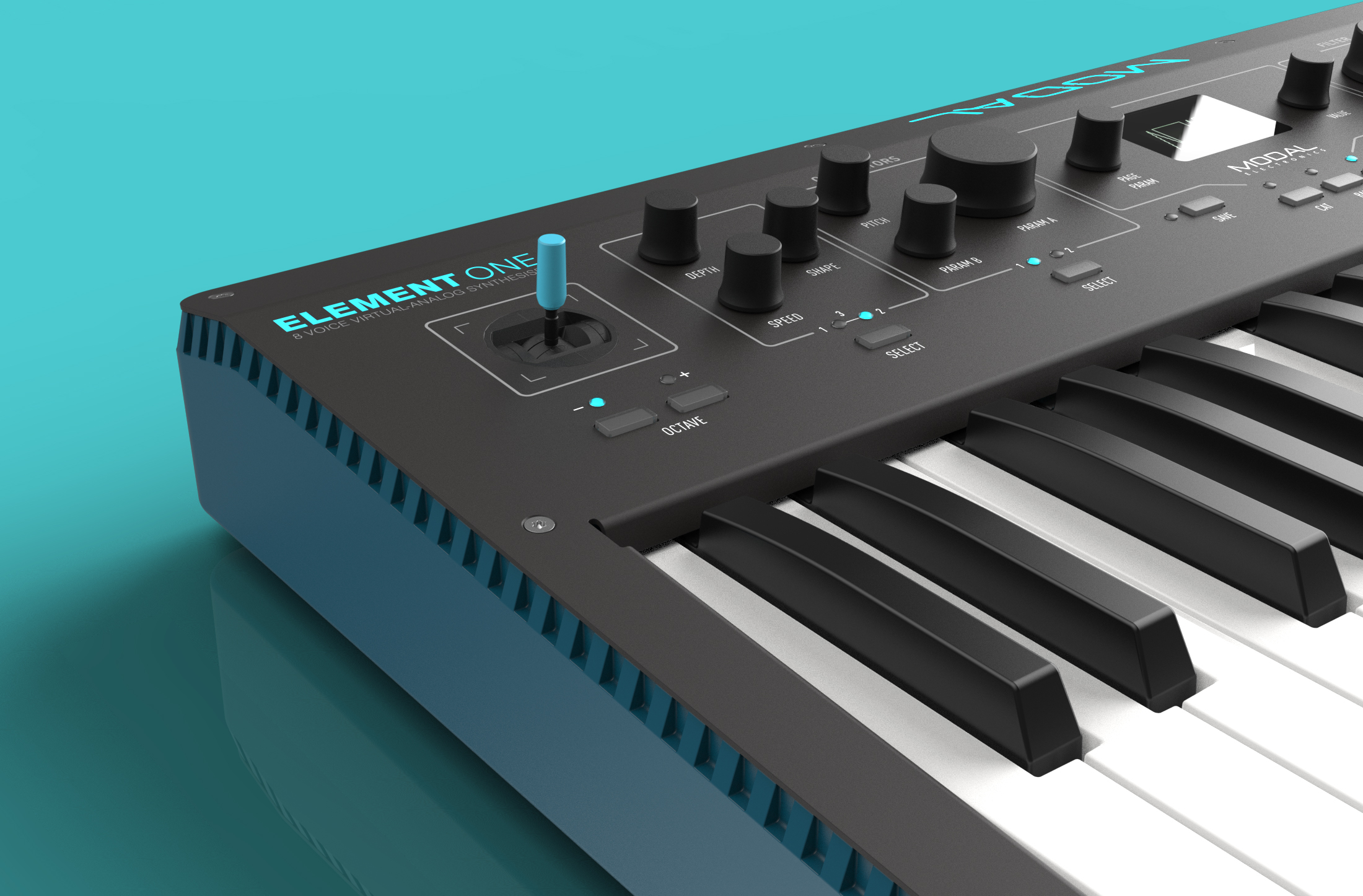
What initially appears to be a purely visual detail is closely connected to the product's construction. Carefully developed geometry allows the complex lower enclosure to be produced as a single injection-molded part. Engineering and aesthetics are therefore not treated as separate disciplines – the manufacturing solution itself becomes part of the instrument's visual identity.
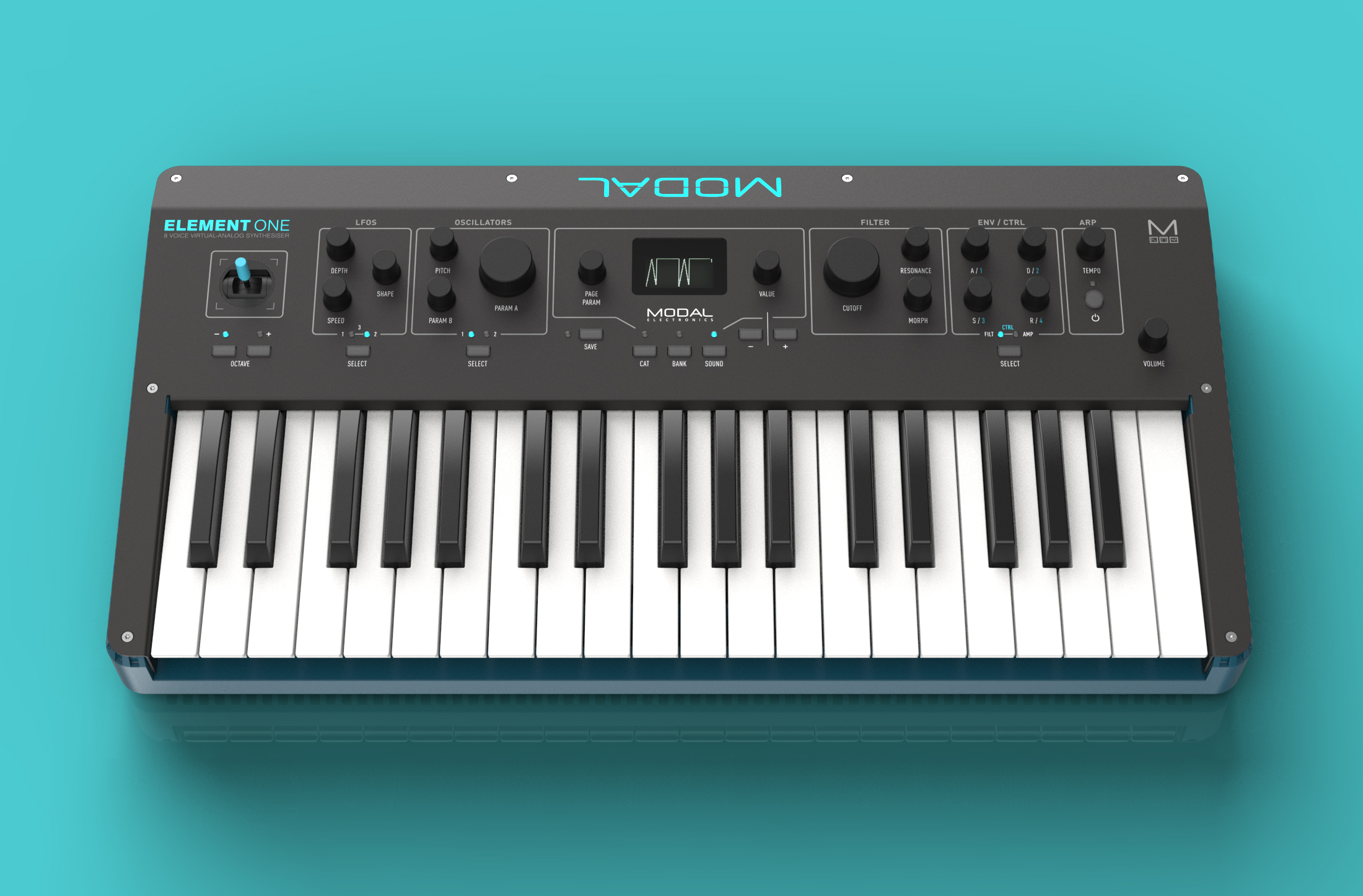
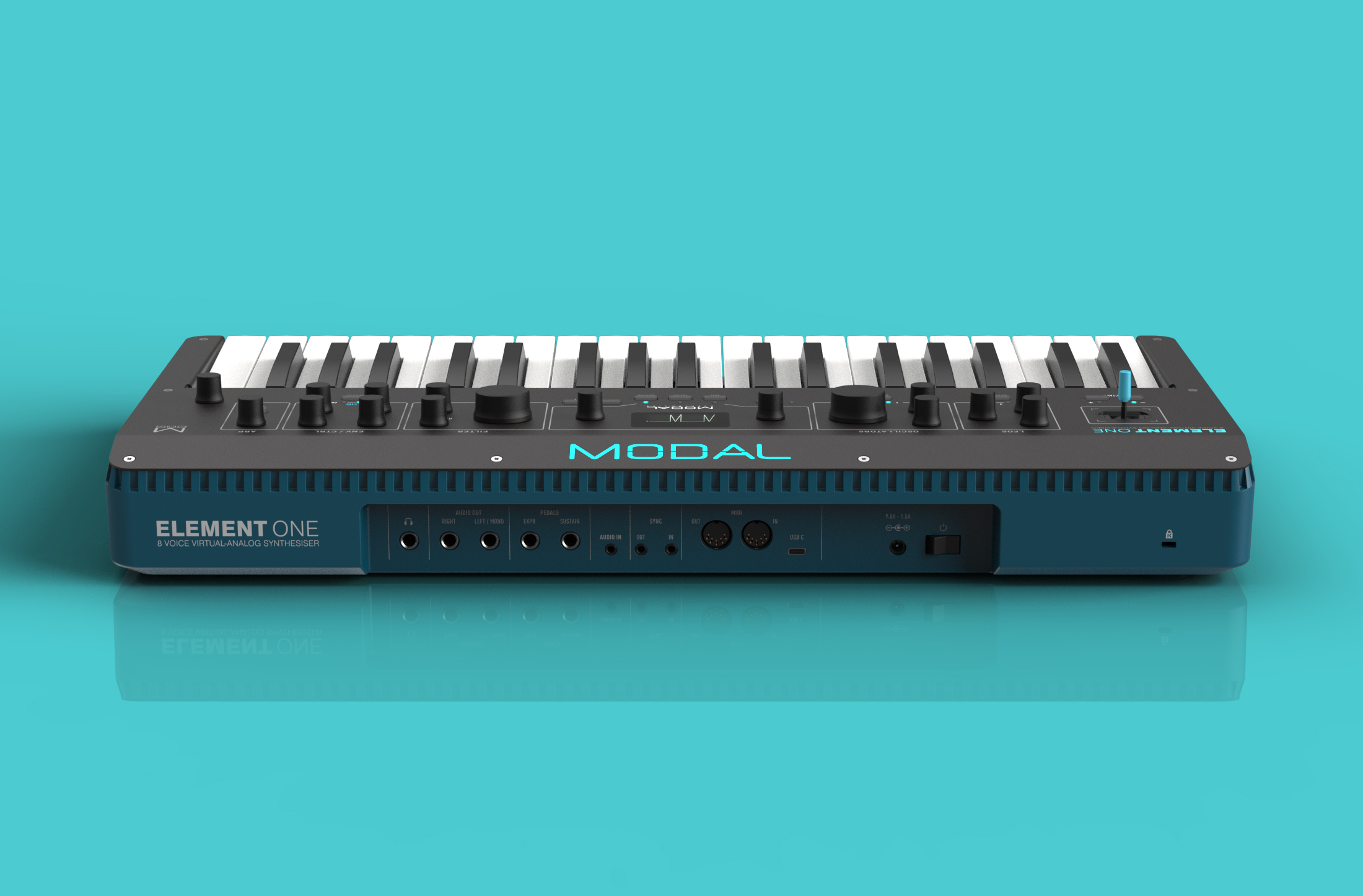
The control surface follows the same principle of clarity and reduction. Functional areas are arranged horizontally and structured by fine graphic lines without fragmenting the panel into rigid sections. Different control sizes create an immediately understandable hierarchy: primary parameters are given greater physical presence, while secondary functions remain visually quieter. Display, buttons, LEDs, and controls combine to create a calm and highly legible interface that never feels crowded despite its functional density.
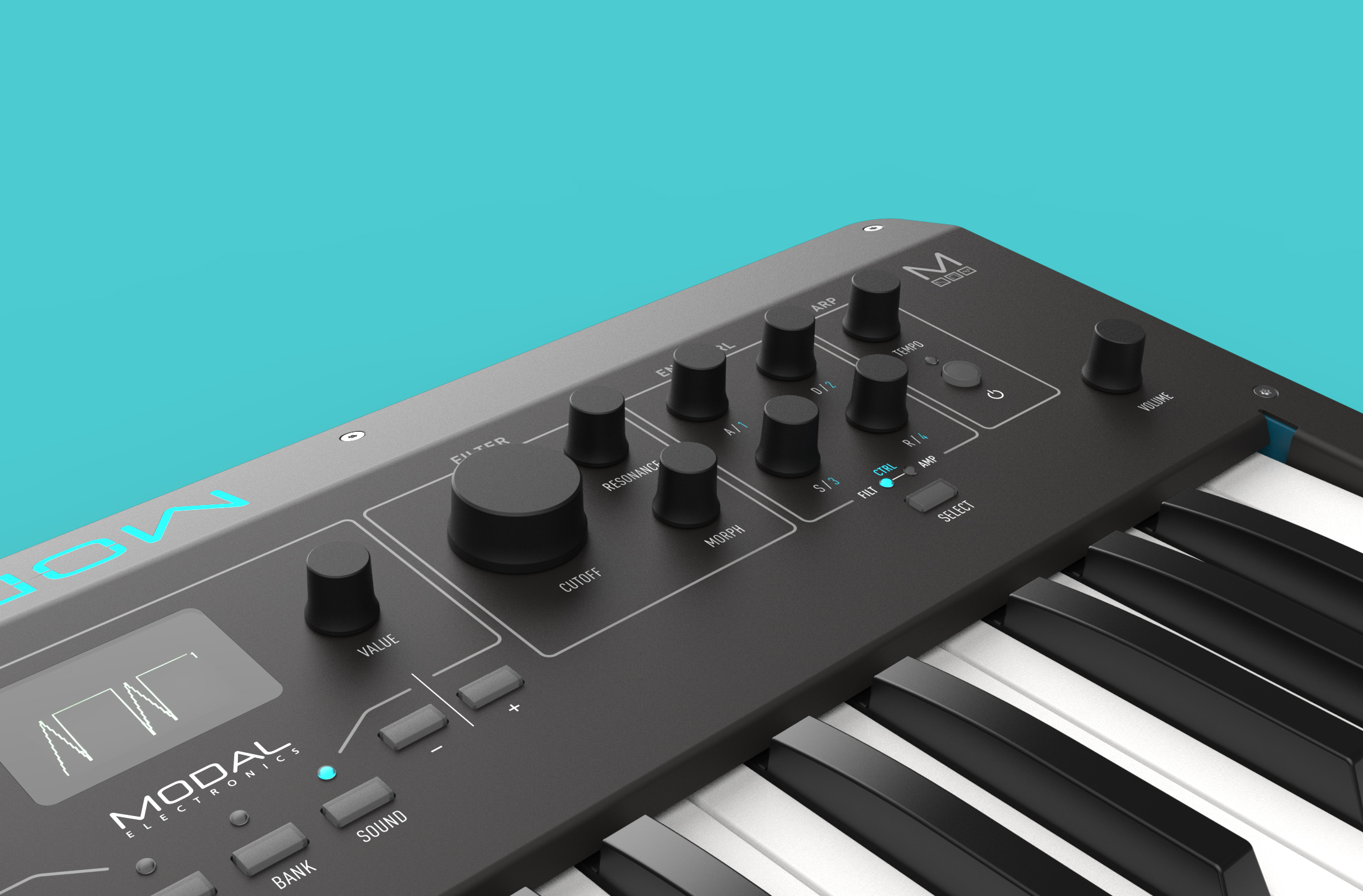
Deep blue and turquoise tones provide a deliberate counterpoint to the almost monochromatic control surface. Turquoise accents reappear selectively in status LEDs, typography, and branding, creating a visual thread that connects the physical product with its user interface.
A particularly distinctive detail is the Modal logo positioned on the rearward-sloping section of the top panel. Illuminated rather than simply printed onto the surface, it becomes part of the architecture of the instrument itself. Especially when viewed from a low angle, it emphasizes the synthesizer's slim profile and gives Element One a subtle technological presence.
The result is an instrument that deliberately avoids expressing its capabilities through visual complexity. Element One feels compact, precise, and approachable – revealing its technical sophistication only where it becomes meaningful to the musician.
For us, the project brings the story full circle: more than a decade after creating Modal's original visual identity, we are now helping shape a new family of instruments that carries that identity forward.